Project Overview
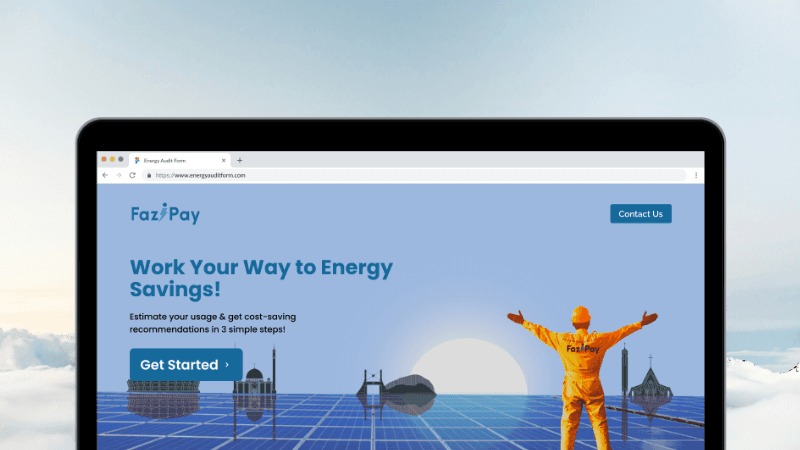
The FaziPay Energy Audit tool is designed to help users estimate their energy usage and receive cost-saving recommendations in three simple steps. The goal was to create a user-friendly and intuitive interface that seamlessly guides users through the process, ensuring they receive accurate and personalized energy-saving solutions.
My Role
UI Designer, User Researcher, User flow and Prototyping
Timeline
1 month
Team Members
Kelech Okorie, UX
Kelvin Eshekhile
Abiodun Salami
Anuoluwapo, PM
Process
Research and Planning
The process began with research and planning. I analyzed competitor energy audit tools to identify best practices and areas for improvement and conducted user research to understand the target audience's needs and pain points. Collaboration with stakeholders was key to defining project goals and key functionalities.
Wireframing and prototyping
In the wireframing and prototyping phase, I created low-fidelity wireframes to outline the basic structure and flow of the landing page. Using Figma, I developed high-fidelity prototypes to visualize the final design. Prototypes were iteratively tested with users to gather feedback and make necessary adjustments.
Design and development
During the design and development stage, I designed a clean, intuitive interface that guides users through the three-step process. The design was made responsive and accessible across different devices. Close collaboration with developers ensured the accurate implementation of the design.
User testing
In the user testing and refinement phase, usability testing sessions were conducted to identify any issues or areas for improvement. Refinements were made based on user feedback to enhance the overall user experience. Final design changes were implemented, followed by a final round of testing to ensure everything was optimized.
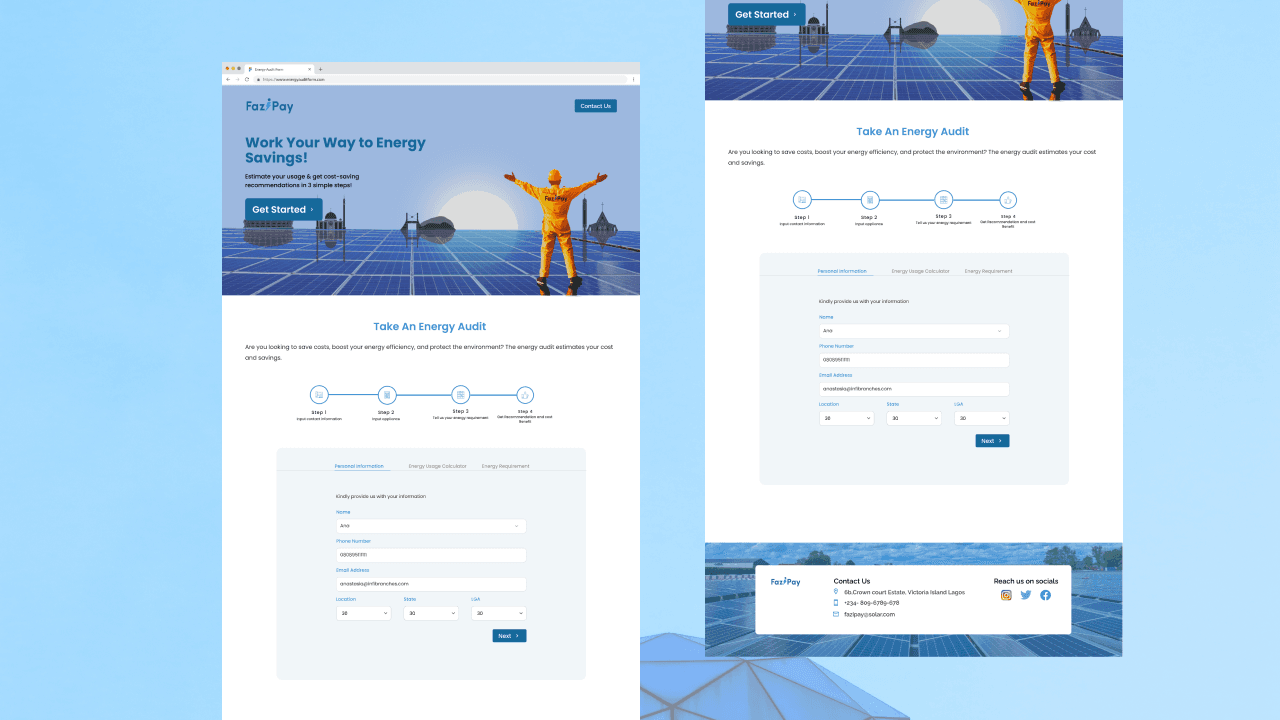
Key Features:
Consumption Input: Fields for estimated power or generator consumption.
Calculation Summary: Display of total wattage and energy audit results.
Recommendations: Personalized solar product suggestions.
Comparison Chart: Visual comparison of current usage
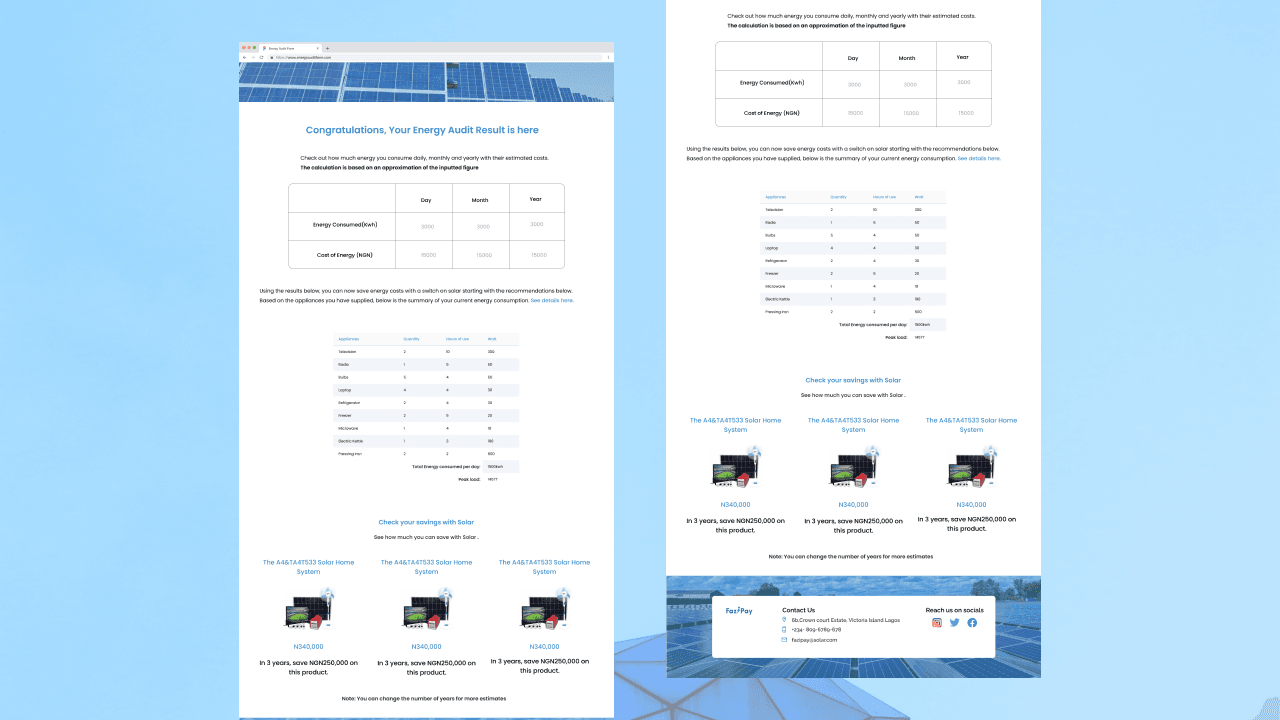
Design Elements
Visual Design
Color Scheme: A calming and professional palette to evoke trust and reliability.
Typography: Clear, readable fonts for easy scanning and comprehension.
Icons & Graphics: Intuitive icons and graphics to aid understanding and reduce cognitive load.
Interaction Design
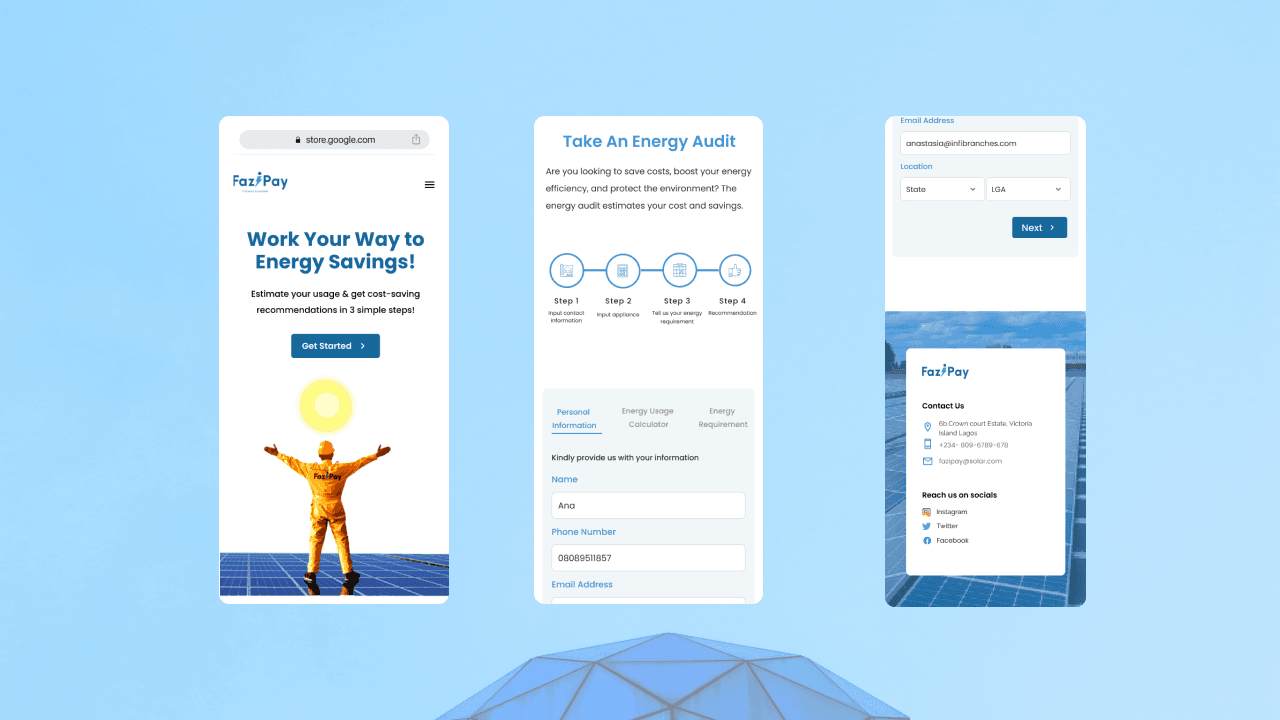
Responsive Layout: Ensures usability across different devices, from desktops to mobile phones.
Microinteractions: Subtle animations and feedback to enhance user engagement and satisfaction.
Accessibility: Compliance with accessibility standards to ensure all users, including those with disabilities, can use the tool effectively.
User Testing & Feedback
Usability Testing: Conducted sessions with a diverse group of users to identify pain points and areas for improvement.
Iterative Design: Made continuous refinements based on user feedback to enhance the overall experience.
Learnings
User Feedback: Continuous user feedback is crucial for refining the design and ensuring it meets user needs.
Collaboration: Close collaboration with stakeholders and developers is essential for successful project implementation.
Iterative Design: An iterative design process allows for rapid prototyping and quick adjustments based on user feedback.
Outcomes
The FaziPay Energy Audit tool successfully met its objectives. It provides users with an intuitive and efficient way to estimate their energy usage and receive personalized, cost-saving recommendations. User feedback highlighted the tool's ease of use and the clarity of its recommendations, leading to higher engagement and satisfaction.
By focusing on user needs and employing best practices in UI/UX design, the FaziPay Energy Audit tool has become an invaluable resource for users looking to optimize their energy consumption and reduce costs with solar solutions.
Visit live website: https://energyaudit.fazipay.com